


























































































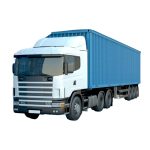
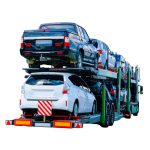

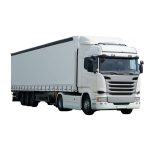
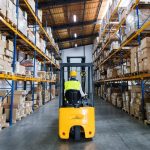
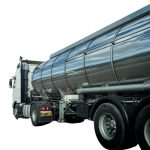
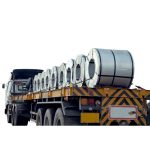
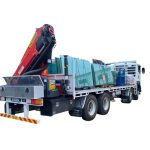

































If you’ve ever assumed that load restraint is “the driver’s job,” it’s time for a rethink. Under Australia’s Heavy Vehicle National Law (HVNL), responsibility for a safely restrained load doesn’t sit with one person — it’s shared across everyone who has a hand in getting that load onto the truck and out onto the road.
This shared responsibility is known as the Chain of Responsibility (CoR), and it’s one of the most misunderstood — and most important — concepts in heavy vehicle compliance.
What Is the Chain of Responsibility?
The Chain of Responsibility is the part of the HVNL that extends safety accountability beyond the driver to everyone else involved in a heavy vehicle journey — from the business that employs the driver to the business sending or receiving the goods (NHVR, Chain of Responsibility).
At the centre of this is the Primary Duty, set out in section 26C of the HVNL. It requires each party in the chain to ensure, so far as reasonably practicable, the safety of their own transport activities — meaning they must eliminate public risks, or minimise them where elimination isn’t practicable (NHVR, Regulatory Advice – The Primary Duty).
This replaced the older “deemed liability” model, under which CoR parties were presumed liable for a breach unless they could prove they’d taken all reasonable steps to prevent it. The current primary duty model instead places a proactive, ongoing obligation on each party rather than a reactive defence.
Importantly, this duty doesn’t end just because a truck has left your premises or your part of the job is done — responsibility follows the transport activity, not the property line (NHVR, WHS and CoR). And it applies based on the function you perform, not your job title or what a contract says — so you can’t contract your way out of it (NHVR, Parties in the CoR).
Who’s Actually in the Chain?
The HVNL doesn’t leave this to interpretation — it defines 10 specific functions that make a person or business a “party in the CoR.” You’re a CoR party because of what you do, not your job title, and a single business can hold several of these functions at once (NHVR, Parties in the CoR):
Consignors Anyone who consigns goods for transport by a heavy vehicle. Consignors are often best placed to influence how a load is packed and restrained at the point of origin, since they set the commercial terms with suppliers, packers and loaders (NHVR, Managing the risks of transporting freight in shipping containers).
Packers Anyone who packs or assembles goods for transport in a heavy vehicle. How a load is packed directly affects whether it can be restrained safely — a poorly packed load can undermine even a well-designed restraint system further down the chain.
Loading managers Anyone managing premises where five or more heavy vehicles are loaded or unloaded each day. This function exists specifically to place responsibility on high-throughput sites for the safety of their loading processes.
Loaders and unloaders Anyone who physically loads or unloads a heavy vehicle. Note that drivers are not automatically CoR parties simply because they drive — but if a driver also loads or unloads the vehicle, both the driver and their employer become “loaders” for that task (NHVR, Parties in the CoR).
Schedulers Anyone who schedules the transport of goods or passengers, or a driver’s work and rest hours. Unrealistic scheduling is one of the most commonly cited causes of downstream breaches — including rushed, under-secured loads.
Operators Anyone who directs the control and use of a heavy vehicle. Operators are responsible for ensuring the vehicle, driver and restraint system are compliant before the vehicle is used.
Beyond these, the remaining CoR functions are employer (employs a heavy vehicle driver), prime contractor (engages a self-employed driver under a contract for services), and consignee (receives goods delivered by a heavy vehicle) (NHVR, Chain of Responsibility and Safety Management Systems).
Why This Matters: Shared Doesn’t Mean Diluted
A common misconception is that shared responsibility means reduced individual responsibility. It doesn’t. More than one party in the chain can hold the exact same duty for the exact same task. If a load comes loose on the highway, investigators won’t stop at the driver — they’ll look back through the chain to the scheduler who set an unrealistic turnaround time, the packer who under-secured the pallet, and the consignor who failed to disclose the load’s true weight.
Each of those parties can be independently liable for breaching the HVNL’s primary duty of safety, regardless of what happened elsewhere in the chain. The NHVR has identified common breaches of the primary duty, including failing to weigh, measure or secure loads, setting schedules with unrealistic timeframes, causing unreasonable delays in loading and unloading, and packing goods incorrectly (Ligeti Partners, HVNL – Chain of Responsibility).
What Good CoR Practice Looks Like
For any party in the chain, meeting your CoR obligations generally means having systems in place to:
- Identify risks in your part of the transport task
- Assess how serious those risks are
- Control them through safe systems, equipment and training
- Monitor whether those controls are working
- Review and remedy problems as they arise
This isn’t a box-ticking exercise — it’s an ongoing responsibility. A safe loading dock last month doesn’t guarantee a safe loading dock today if equipment has worn out, staff have changed, or schedules have tightened.
The Takeaway
If your business touches a load at any point before it reaches its destination — whether you’re packing a pallet, scheduling a run, or signing off on a loading dock — you’re part of the Chain of Responsibility, whether you’ve thought about it that way or not.
The safest (and most legally sound) approach is to stop asking “is this someone else’s job?” and start asking “what can I control here, and am I doing it safely?” Because under the HVNL, that question — not your job title — is what determines your liability.
References
- National Heavy Vehicle Regulator, Chain of Responsibility
- National Heavy Vehicle Regulator, Regulatory Advice – The Primary Duty (HVNL s.26C)
- National Heavy Vehicle Regulator, Regulatory Advice – WHS and CoR
- National Heavy Vehicle Regulator, Parties in the CoR
- National Heavy Vehicle Regulator, Managing the risks of transporting freight in shipping containers
- National Heavy Vehicle Regulator, Chain of Responsibility and Safety Management Systems (PDF)
- National Heavy Vehicle Regulator, Load Restraint Guide 2025 (PDF)
- Ligeti Partners, Heavy Vehicle National Law – Chain of Responsibility
Note: This post is general guidance based on the sources above and is not a substitute for legal advice. If you need to understand your specific obligations under the HVNL, consult a qualified workplace safety or transport law professional.
You May Also Be Interested In
Why Tegral Pallet Angles Last Longer Than Standard Alternatives
Checklist for August 1 HVNL Changes
Fuel Excise Relief Extended: What It Means for Transport Operators
Why E-Track and F-Track Straps Are Rated Lower Than Regular Straps
Check Out Our YouTube Channel
Products
100mm x 100mm x 2400mm E-Dunnage Timber

10L Chain Bucket
Ratchet Tie Down Long Handle Pulldown Tail 2500kg X 50mm
$16.50 – $17.50 ex GST
Round Sling 2T
$11.29 - $130.40$11.29 - $130.40