


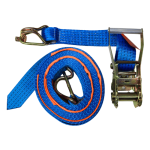
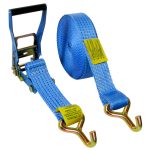



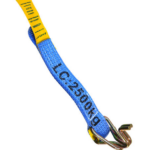
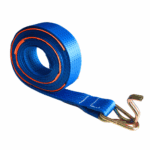
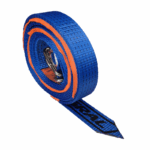
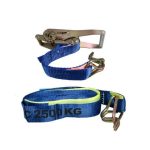
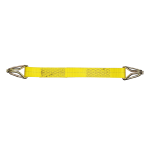
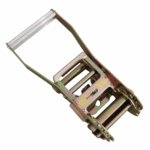





























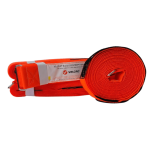






























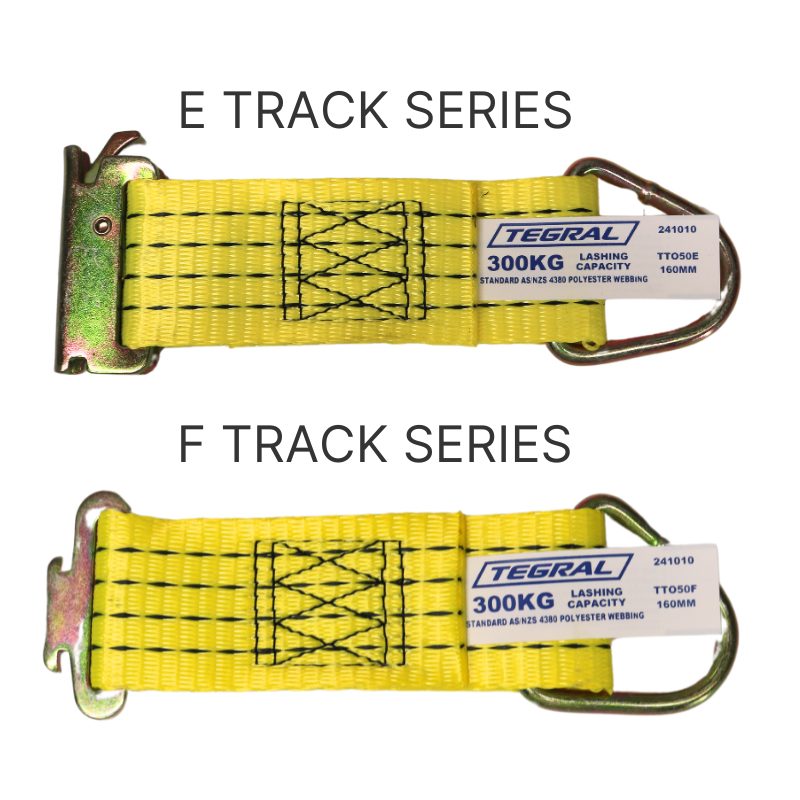
If you’ve ever bought a set of e-track or f-track straps and noticed the Lashing Capacity is lower than a standard ratchet strap of the same webbing width, you’re not imagining things, and the reason matters a lot for load restraint compliance.
The short answer: it’s not just the strap you’re rating. It’s the entire system.
The Track Itself Has a Rating, and It’s Often the Weakest Link
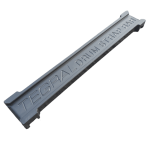
The most important thing to understand about e-track and f-track systems is that the track has its own working load limit, applied per slot. That per-slot rating is frequently well below what the strap webbing is capable of handling on its own. Unfortunately, the track ratings are often unknown.
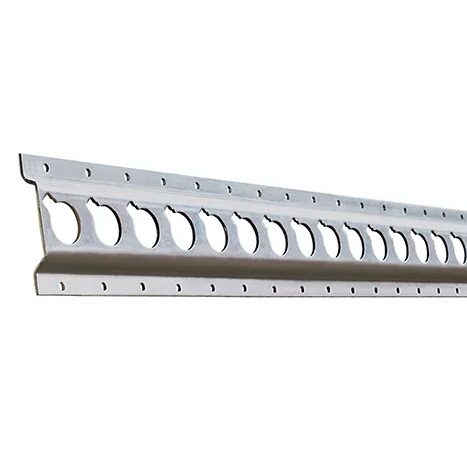
So when a manufacturer rates an e-track strap at a lower capacity than a comparable standard strap, they’re not cutting corners on the webbing — they’re rating the system honestly. A 50mm strap attached to an e-track fitting is only as strong as the slot it’s clipped into. Quoting the strap’s webbing capacity without accounting for the track would be misleading at best, dangerous at worst.
Interesting Fact: Often a track will be ripped off the wall of the trailer, before anything to do with the strap fails.
The End Fittings Add Another Layer
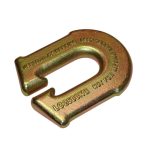
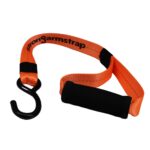
Beyond the track itself, the end fittings (the clips or hooks that interface with the track slots) carry their own rated capacity. These fittings are typically rated lower than a standard J-hook or flat hook of the same strap width.
Every component in the chain has a rating, and the strap assembly can only be rated to the lowest of those components. When you see a lower LC on an e-track or f-track strap, the fitting is often part of the reason why.
Shoring Bars: Worth Thinking About
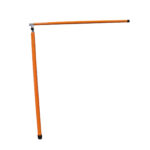
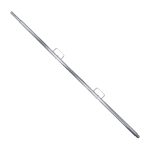
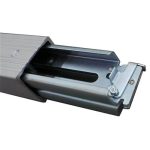
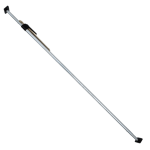
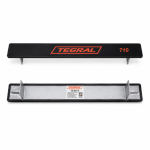
Shoring bars are widely used with e-track and f-track systems, and most operators are perfectly comfortable with the fact that they’re rated quite low — often in the 200–300kg range. That’s just the nature of the component, and people accept it.
Which raises an interesting question: if a 200kg-rated shoring bar is considered fit for purpose in that application, why do those same operators sometimes insist that their e-track straps need to be rated at 1000kg?
Track Mounting and Installation Matter Too
Even if your track, fittings, and strap are all rated appropriately, the way the track is mounted to the vehicle plays a significant role in the overall system capacity.
Factors like bolt size and spacing, the material and thickness of the wall or floor substrate, and whether the installation was engineered to handle the intended loads all affect what the system can actually handle in a restraint scenario. A track bolted into thin sheet metal with undersized hardware will fail long before any rated component does.
This is why manufacturer installation guidelines exist, and why improvised track installations are a compliance and safety risk regardless of what’s printed on the strap.
Putting It Together: Why Strap Rating ≠ System Rating
The fundamental principle behind all of this is simple: a restraint system is only as strong as its weakest component.
When you use a standard ratchet strap with quality end hooks anchored to a rated tiedown point, the strap webbing and hardware is often the limiting factor — which is why the strap’s LC accurately represents the system’s capacity.
With e-track and f-track systems, you introduce additional components — the track, the slot, the fitting — each with their own rating. The system WLL has to reflect the lowest-rated element in that chain. That’s not a flaw; it’s the correct and honest way to rate a multi-component restraint system.
The Compliance Takeaway
For operators, the key takeaway is this: don’t shop for compliance by looking at strap ratings alone. If you’re using e-track or f-track systems, you need to know the rated capacity of every component and calculate your restraint capacity from the lowest figure.
If your load restraint calculations require a certain lashing capacity, make sure the entire system meets that requirement, not just the webbing you can read off a label.
Buying heavier straps won’t solve an under-rated track. Understanding the system will.
You May Also Be Interested In
How to Check If Your Load Restraint Setup Is Compliant
Lashing Capacity vs Working Load Limit: Understanding the Numbers on Your Equipment Tags
Loading Plans: Taking the Guesswork Out of Load Restraint
Practical Video Resource to Help Drivers Manage Steep Descents
Check Out Our YouTube Channel
Products
100mm x 100mm x 2400mm E-Dunnage Timber

10L Chain Bucket