






























































Making Sense of Australia’s Trailer Setups: From Semis to Triples
In Australia, the trailer setup behind a truck tells you a lot, not just what it’s carrying, but how far it’s travelling and what roads it can legally access. Whether it’s a single semi hauling freight between capital cities or a triple road train powering through the outback, each configuration has a purpose.
Here’s a breakdown of the most common trailer combinations and body types seen on Australian roads, plus where they’re used and what it means for your gear, equipment, and load restraint.
Trailer Combinations
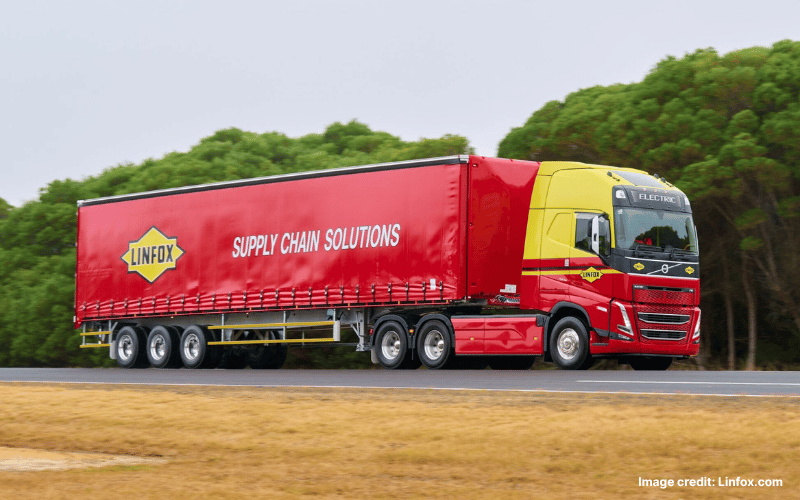
Semi-Trailer (Prime Mover + Single Trailer)
Length: up to 19 m Mass: ~42.5 t
This is the standard Australian combination — a prime mover towing one semi-trailer. You’ll find these everywhere from port runs to metro freight and regional deliveries.
- Pros: Easiest to operate and access, fits standard depots, widest network access.
- Common freight: Palletised goods, general freight, containers, machinery.
- Tegral tip: Standard semis still require strong restraint points and corner protection — ideal for showcasing your Pallet Armour or strap guards.
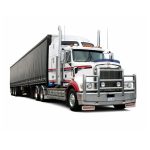
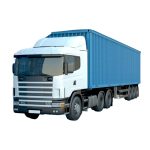
Example: Semi-Trailer
Pig Trailer (Rigid Truck + Pig or Dog Trailer)
Length: up to 19 m Mass: ~41 t
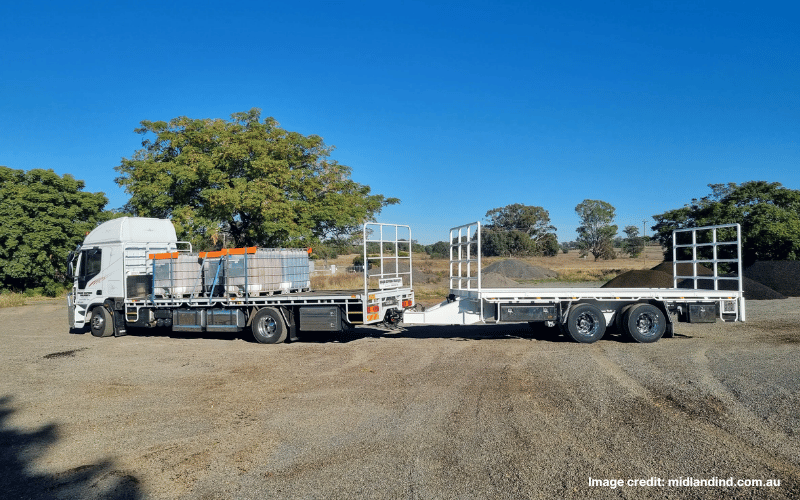
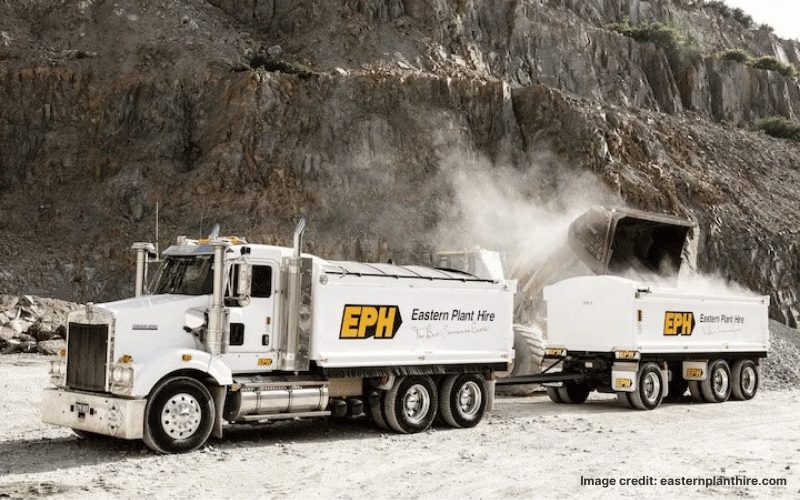
A “pig trailer” (or “dog trailer”) is coupled behind a rigid truck with a drawbar or dolly. They’re popular with tippers, builders’ supplies, and short-haul operators. A pig trailer has its axle in the centre and transfers some weight to the towing vehicle, while a dog trailer has front and rear axles and carries all its own weight.
- Pros: Great for regional work where manoeuvrability matters.
- Common freight: Sand, gravel, construction, agricultural products.
- Tegral tip: Double articulation means more movement — use reinforced straps or corner boards to prevent chafing.
Examples: Pig Trailer (Left) Dog trailer (Right)
B-Double (Prime Mover + Two Semi-Trailers, Fifth-Wheel Coupled)
Length: up to 26 m Mass: up to 62.5 t
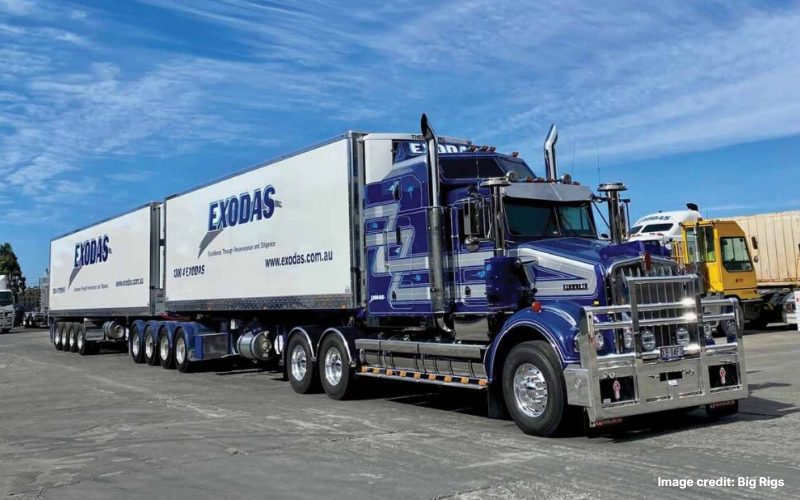
The backbone of Australia’s freight network. The first trailer connects to the prime mover, and the second mounts via a fifth wheel on the back of the first.
- Pros: Carries more than a single, yet still has good manoeuvrability and broad network access.
- Common freight: Palletised freight, FMCG, steel, bulk materials.
- Tegral tip: More trailers = more restraint zones. Use high-visibility ratchet straps and strap keepers for quick checks during pre-trip inspections.
Example: B-Double
A-Double (Prime Mover + Lead + Dolly + Rear Trailer)
Length: up to 36.5 m Mass: up to ~74 t
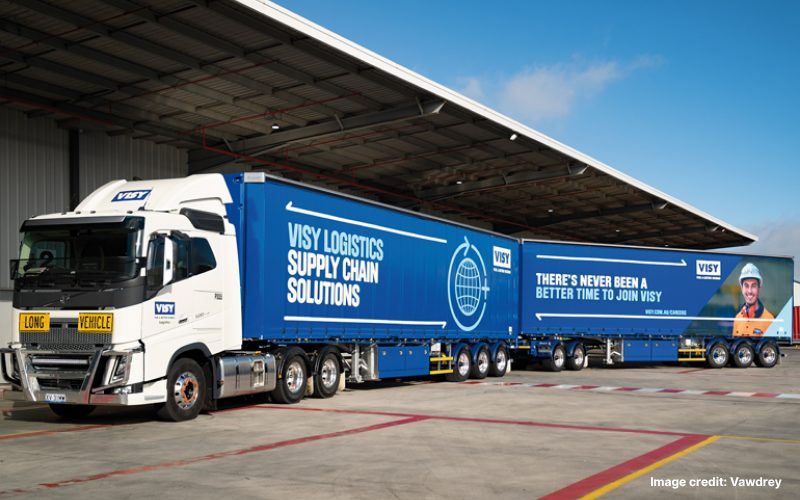
Similar to a B-Double but with a converter dolly between the trailers. You’ll see these on long-haul or port routes under PBS (Performance-Based Standards) approvals.
- Pros: Excellent payload capacity for bulk haulage.
- Cons: Requires special route permits and experienced drivers.
- Tegral tip: Long setups mean more potential flex. Reinforced edge guards and tie-down points prevent load movement during long hauls.
Example: A-Double
B-Triple (Prime Mover + Three Semi-Trailers, Fifth-Wheel Coupled)
Length: ~35 m Mass: ~82.5 t
A true “triple” B-coupling. It’s similar to a B-Double, but with an extra trailer — common in high-productivity freight corridors or mining regions.
- Pros: Increased capacity and stability compared with A-triples.
- Common freight: Bulk fuel, grain, livestock, heavy industrial freight.
- Tegral tip: These configurations require top-tier restraint gear. Pallet Armour and anti-chafe solutions reduce risk of damage during long multi-trailer hauls.
Example: B-Triple
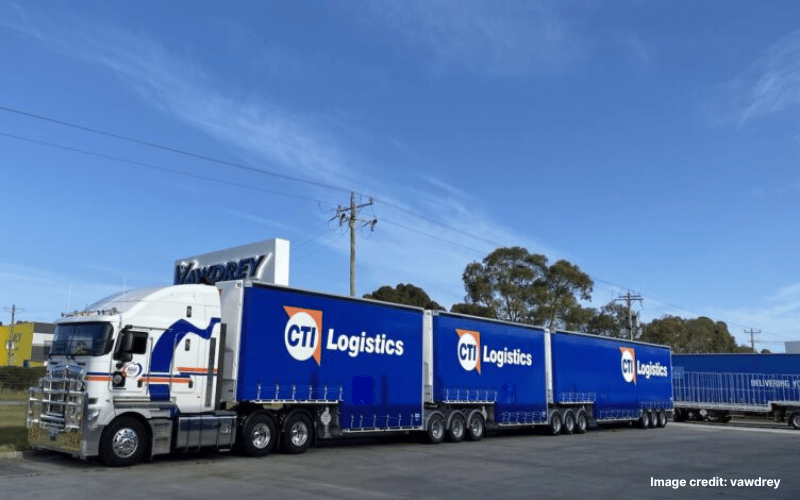
AB-Triple (Prime Mover + B-Double + Single Trailer)
Length: up to 36.5 m Mass: ~85 t
A hybrid configuration — the first two trailers are coupled like a B-Double, followed by a third trailer on a dolly. It offers the productivity of a road train with better tracking.
- Pros: Higher payload than B-Double, less complex than full road train.
- Where used: Queensland, NT, SA outback routes under PBS schemes.
- Tegral tip: Ideal to highlight heavy-duty strap systems, trident hooks, and multi-trailer restraint kits.
Example: AB-Triple
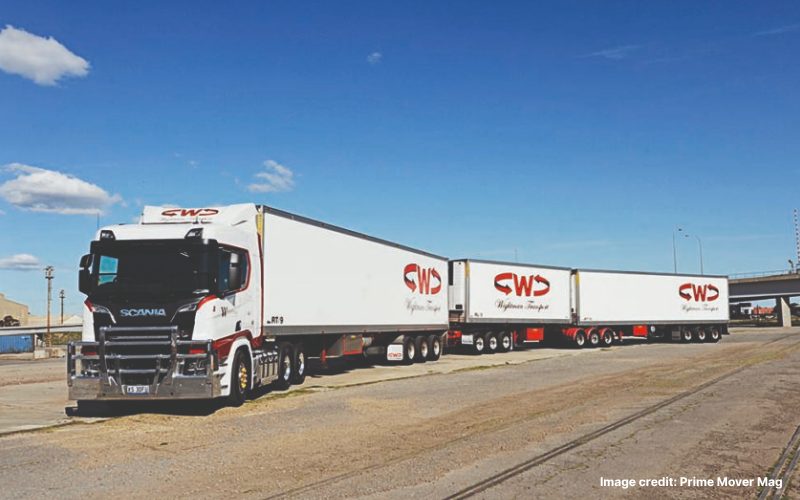
Part 2: Trailer Body Types
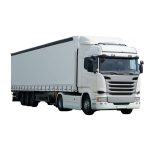
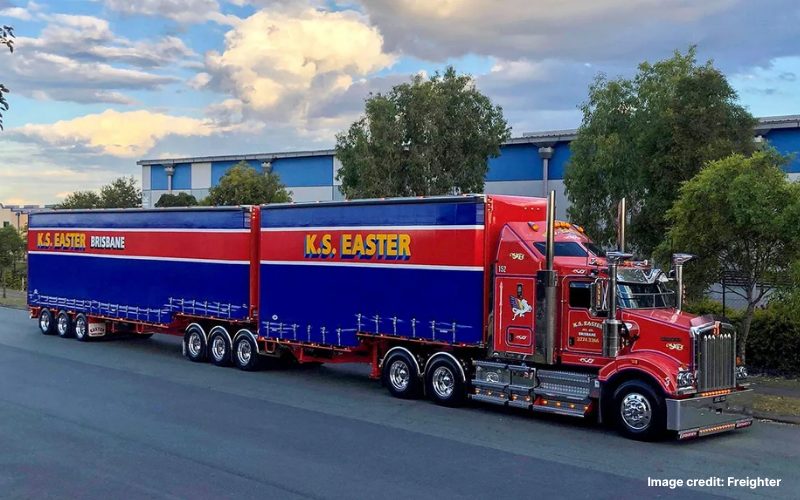
Tautliner (Curtainsider)
A tautliner, also known as a curtainsider, is one of the most common trailers on Australian roads. It features retractable curtains along both sides, secured with buckles and straps, allowing quick side loading and unloading. The curtains can be drawn back for forklift access, making it ideal for palletised freight.
- Best for: General freight, palletised goods, retail stock, FMCG, and warehousing logistics.
- Advantages: Fast loading/unloading, weather protection, versatile freight use.
- Typical length: 13.6 m for a single semi or 26 m for a B-Double set.
Refrigerated Van (Fridge Van)
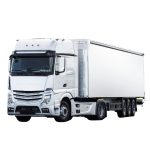
A refrigerated van, or reefer, is a fully enclosed trailer with insulated walls and a built-in refrigeration unit to control internal temperature.
- Best for: Temperature-sensitive goods like food, dairy, beverages, and pharmaceuticals.
- Features: Thick insulated panels, rear barn doors, and temperature control systems that can cool or freeze depending on the cargo.
- Advantages: Maintains product integrity and hygiene during transport.
- Common sight: Linehaul operations servicing supermarkets, cold stores, and regional food distribution.

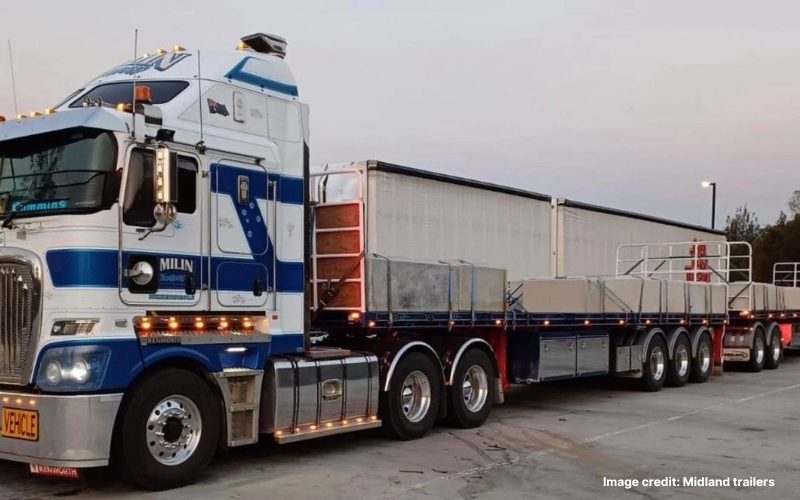
Flat Top Trailer
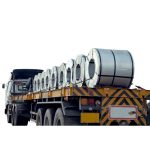
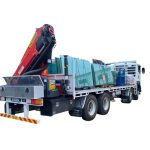
A flat top is the simplest trailer body type, a flat, open deck with no sides or roof. It’s designed for cargo that’s oversized, irregular, or best loaded by crane.
- Best for: Machinery, building materials, steel, pipes, or containers.
- Features: Steel or hardwood floor, tie-down points along the coaming rail, and removable posts or gates for flexibility.
- Advantages: Easy to load from any side or above, and ideal for heavy, bulky, or tall loads.
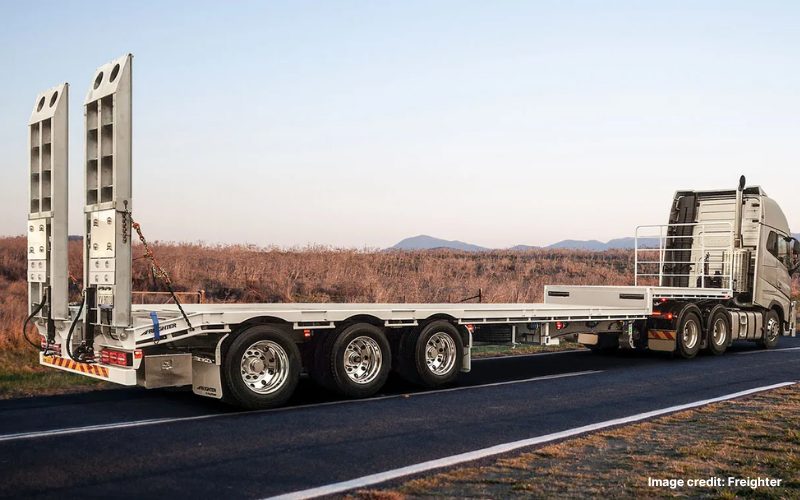
Drop Deck / Step Deck
A drop deck, or step deck, has two deck heights: a raised section above the prime mover’s turntable and a lower deck towards the rear. The design allows taller cargo to be carried without exceeding legal height limits.
- Best for: Heavy machinery, containers, large crates, and high-profile freight.
- Features: Ramps or hydraulic mechanisms for loading, multiple tie-down points, and sometimes extendable decks.
- Advantages: Increased load height clearance and lower centre of gravity for better stability.
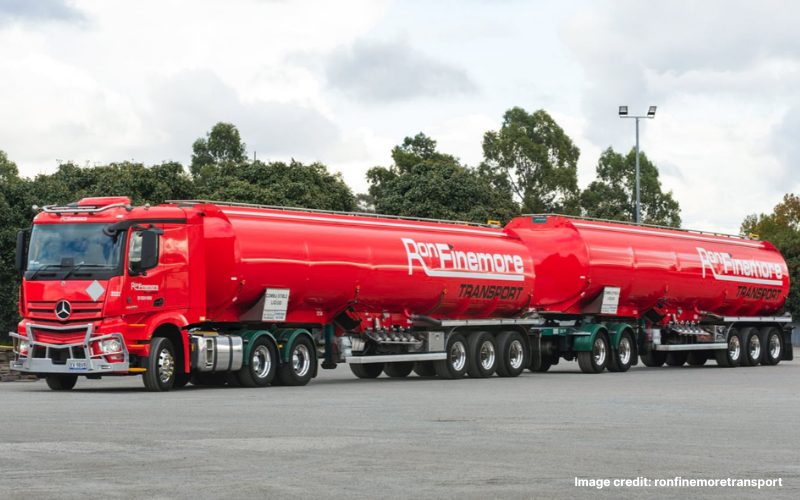
Tanker Trailer
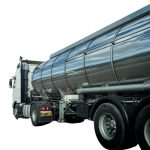
Tanker trailers are cylindrical, sealed tanks mounted on a semi-trailer chassis, built to transport liquids or gases.
- Best for: Fuel, milk, chemicals, bitumen, or water.
- Features: Internal baffles to control fluid surge, bottom-loading systems, and pressure-rated valves.
- Variations: Food-grade stainless steel for dairy, aluminium for fuel, and insulated tankers for temperature-sensitive materials.
- Advantages: Designed for safety, spill control, and efficient liquid handling.
Tipper Trailer
A tipper trailer (or end-dump) features a hydraulic system that lifts the body to unload loose material through the rear or side.
- Best for: Sand, gravel, grain, demolition waste, and quarry materials.
- Features: Hydraulic hoists, tailgates, and reinforced body construction to withstand impact from heavy aggregates.
- Variations: End tippers, side tippers, and belly dumpers, depending on the material type and unloading method.
- Advantages: Quick unloading, durable build, and widely used in construction, mining, and agriculture.

You May Also Be Interested In
How to Check If Your Load Restraint Setup Is Compliant
How To Reduce Tampering and Cargo Theft: Plastic Strip Seals
15 Handy Things Every Truckie Should Pack for the Road
5 Ways Fleet Managers can save Time and Money: Cut Costs, Stay Compliant
Check Out Our YouTube Channel
Products
Peaked Curved Angle
$15.00 ex GST
G70 Grab Hook 6mm – Clevis
$4.50 ex GST
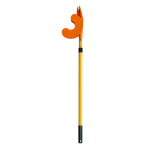
Strap Launcher

Round Single Use Sling 1T x 1.5m
$8.50 ex GST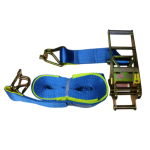
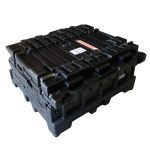
Dangerous Goods Segregation Box – Type II
$3,720.40 ex GST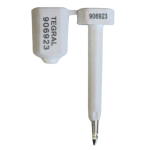
Mini Container Bolt Seal (Domestic Use)
$0.66 ex GST
Sub Class Dangerous Goods Banner (EIP)
$120.00 ex GST
Portable Truck Fall Protection Barrier
Ratchet Strap Thrower