










































































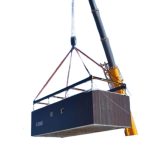
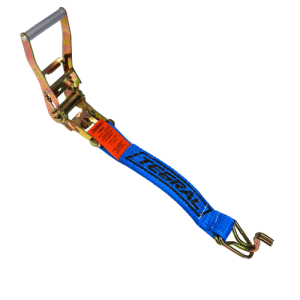
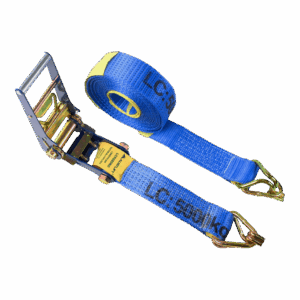
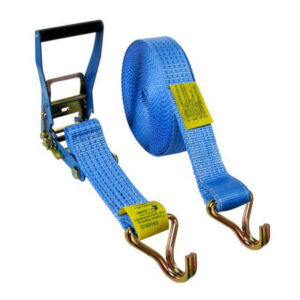








Precast concrete elements – wall panels, tilt-up slabs, bridge beams – are a routine part of construction logistics, but they’re far from routine to transport. The weights involved are substantial, the shapes are awkward, and the forces acting on a load during a typical road journey are enough to cause real problems if the restraint system isn’t properly set up.
Getting it right comes down to a few key areas: choosing the right vehicle, positioning the load correctly, selecting appropriate lashing equipment, and checking everything before and during the trip.
Why loads shift on the road
Any load on a moving vehicle is subject to constant forces: braking, acceleration, cornering, road camber, rough surfaces, and wind. For most cargo that’s manageable. For a multi-tonne concrete element, even moderate braking can generate enormous forward force. A load that’s undersecured doesn’t just risk falling off the truck; it can destabilise the vehicle entirely, particularly on corners or in adverse camber.
Concrete panels and beams also tend to have smooth, hard surfaces, which means lower friction between the load and its supports than you might expect. That makes the engineering of the restraint system, not just the presence of chains, the critical factor.
Transporting panels
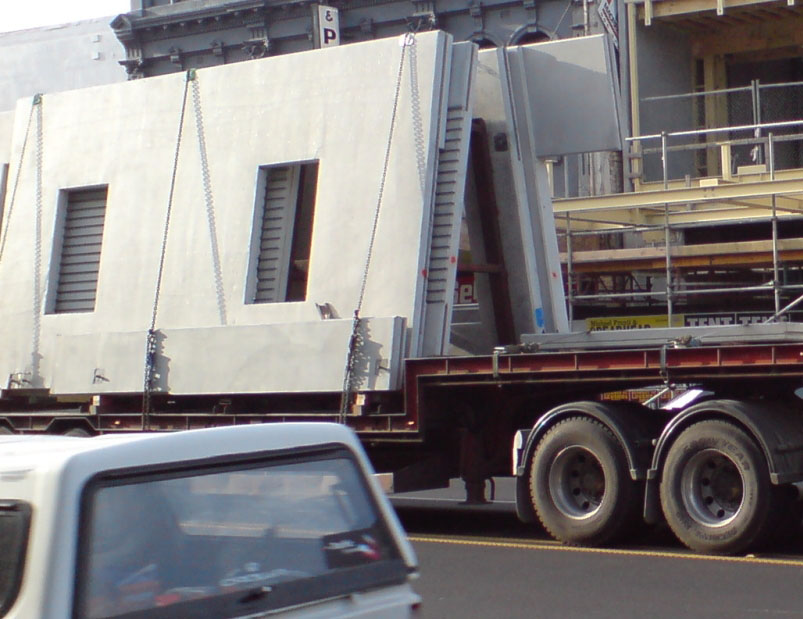
Panels travel in one of two orientations: flat (horizontally stacked) or on-edge, standing upright in A-frames. Each approach has different requirements.
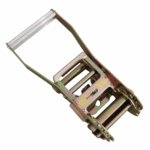
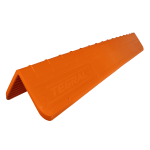
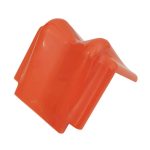
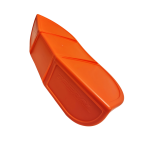
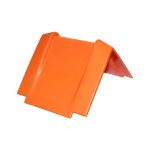
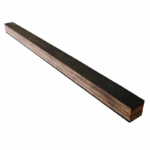
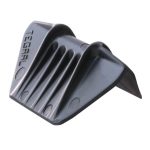
Flat panels are supported on hardwood timber bearers, typically 100 × 100 mm minimum, laid flat rather than on edge. Bearers placed on their side can roll forward under braking and release all tension at once, which is why the orientation matters. Lashings are applied at each bearer position, with corner protectors under every chain to prevent movement and surface damage.
On-edge panels need certified A-frames: steel frames engineered specifically for the load they’ll carry. These frames are secured to the vehicle deck, ideally with bolts, pins, or twist-locks. If chains are used instead, they should apply downward force on the frame to increase friction, and rubber matting between the frame and the deck helps avoid steel-on-steel contact.
Low-deck vehicles (drop-deck, step-deck, or low-loader trailers) are the standard choice for large or tall panels. They keep the centre of gravity lower, which improves stability, and the goose neck provides natural forward blocking for the load.
Lashing capacities
Lashing equipment is rated by lashing capacity (LC), the maximum force it can reliably restrain. For concrete panels, the minimum specifications are:
| Type | Size | Minimum LC |
|---|---|---|
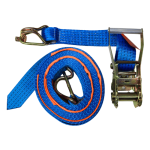
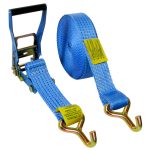
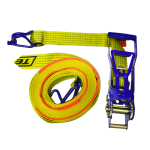
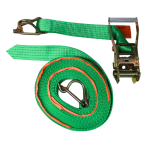
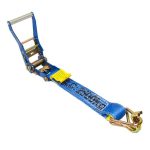
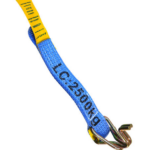
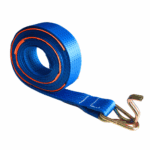
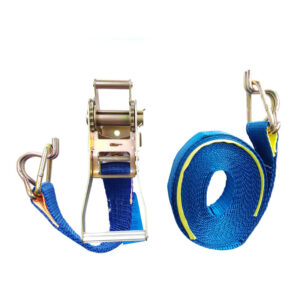
| Webbing | 50 mm | 2,500 kg |
| Transport chain | 8 mm | 3.8 t |
| Transport chain | 10 mm | 6 t (4.5 t with grab hooks) |
| Transport chain | 13 mm | 9 t (6.7 t with grab hooks) |
On flat-top trailers without a goose neck to block forward movement, a safety chain is added around the front of the load, positioned about two-thirds of the way up. It runs at no more than 30° to the horizontal and needs to provide at least 25% of the load’s total weight as additional forward restraint. For a 25-tonne load, that’s 7.5 tonnes of extra capacity from that single chain.
Transporting beams
Large structural and bridge beams, often anywhere from 30 to well over 100 tonnes, operate on a different scale of complexity. Vehicle selection needs to be based on a verified beam weight, with the platform, low-loader, and dolly components all rated for the load they’ll carry.
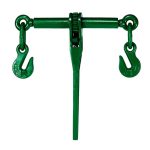
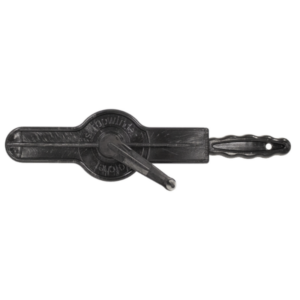
The restraint system for beams is formally engineered and certified. Critical variables include the friction properties of the bolster surface where the beam sits, chain sizes matched to the actual load weight, and the tensioning method used. Ratchet or sliding-lever turnbuckles are preferred over standard chain dogs — they produce more consistent pre-tension and are easier to use safely.
For loads with a high centre of gravity, a static roll threshold (SRT) calculation is typically carried out to confirm the vehicle combination is stable under the worst-case cornering conditions it might encounter on the permitted route.
Tie-down holes: Beams over 25 tonnes ideally have at least four tie-down holes of adequate diameter at each end, sized to accommodate chain corner protectors and positioned clear of lifting lugs.
On extendable trailers, 200 × 200 mm square timber bearers are standard, and “double-dogging” the chains (looping them rather than running straight across) gives more even clamping over the right-angle edges of the beam profile.
Double-articulated combinations
Very long beams often require a prime mover, low loader, and steerable rear dolly. The turntable joining these units has to handle full dynamic braking forces, and securing it with blocking pins or bolting it to the low loader floor adds an important layer of redundancy. High-friction rubber between steel-on-steel contact surfaces is standard throughout.
All coupling points use positive locking pins rather than spring clips. Spring clips can vibrate loose on long hauls, and any locking mechanism should be verifiable by a quick visual check without dismantling anything.
Before and during the trip
Before moving off
- Confirm load weight with the driver, including individual element weights
- Check panels and beams are fully cured: around 3 days for panels, 7 days for beams
- Verify all lashings, connections, and brakes are in order
- For complex beam loads, a signed pre-start checklist is common practice
During the trip
- Loads settle in the first few kilometres, which can loosen lashings, so re-check tension early
- Check again after any sharp manoeuvre or emergency braking
- At the destination, restraints stay in place until the crane takes the initial weight of the element
You May Also Be Interested In
Larger Road Trains Get Green Light on WA Highway Under Trial Conditions
HVNL Reform 2026: The Complete Guide to What Is Changing and How to Prepare
The Ultimate Guide to Trucking Events in Australia 2026
Sham Contracting in the Spotlight: What Transport Operators Should Know
Check Out Our YouTube Channel
Products
G70 Grab Hook 6mm – Clevis
$4.50 ex GST

Strap Launcher

Round Single Use Sling 1T x 1.5m
$8.50 ex GST
1050mm Pallet Angle – White
Original price was: $14.35.$10.00Current price is: $10.00. ex GST
Dangerous Goods Segregation Box – Type II
$3,720.40 ex GST
Mini Container Bolt Seal (Domestic Use)
$0.66 ex GST
Sub Class Dangerous Goods Banner (EIP)
$120.00 ex GST
Portable Truck Fall Protection Barrier