




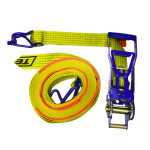
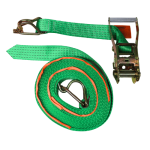
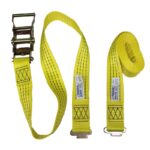

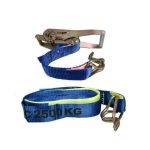
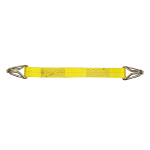




















































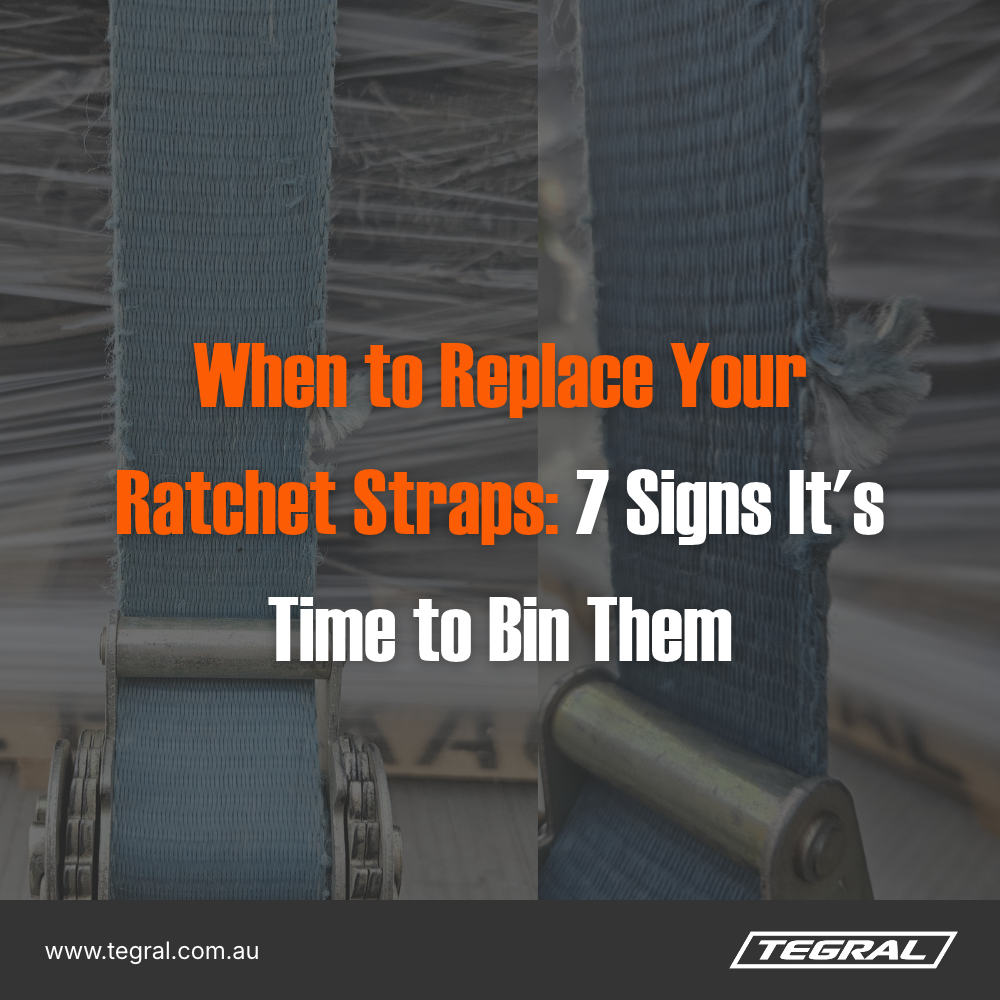
A ratchet strap doesn’t announce when it’s about to fail. It looks a bit tired, it’s still holding tension, and it goes back on the truck one more time. Then a corner cuts through a weakened edge, or a sun-baked strap lets go under heavy braking.
For fleet operators, that’s more than a lost load. Under Chain of Responsibility, everyone who controls or influences the transport task has a role in making sure the gear is fit for purpose. A worn strap that should have been binned is hard to defend.
The good news is that most strap damage is easy to spot if you know what to look for. Here’s when to replace your ratchet straps, drawing on the national Load Restraint Guide 2025 and industry guidance.
How long do ratchet straps last?
There’s no fixed expiry date on a ratchet strap. Its working life depends on three things: how often it’s used, how hard it’s worked, and how it’s stored.
As a rough guide, some suppliers suggest a strap in occasional use might last a few years, while one doing daily heavy-duty work could need replacing within months. In practice, the calendar matters less than condition. A two-month-old strap that’s been dragged over a sharp edge is finished. A well-kept strap that lives in a toolbox out of the sun can stay in service much longer.
Australian conditions are tough on webbing. Polyester breaks down under prolonged UV exposure, so straps that ride on headboards or sit on the deck in the sun will age faster than those stored away between jobs.
That’s why the real answer is: inspect before every use, and bin it as soon as it shows any of the signs below.
7 signs it’s time to bin your ratchet strap
The Load Restraint Guide 2025 says webbing and its attachments should be replaced if wear, damage or exposure has weakened them by 10% or more of their original strength. You can’t measure that by eye, so these are the warning signs to look for.
1. Cuts, nicks or tears
Cuts are the most common reason straps fail, and they usually happen where the webbing meets the load or runs over the coaming rail. The guide’s illustration marks damage across 10% of the strap’s width as the point to replace it. Edge cuts are especially dangerous because they can tear further under load.
2. Furry or hairy webbing
If the surface of the strap looks fuzzy, the webbing is worn. The guide warns that a furry appearance can mean load-bearing fibres are already broken, even if the strap still feels solid.
3. Faded, stiff or brittle webbing
Prolonged sunlight breaks down polyester fibres. Watch for colour that has faded noticeably, webbing that feels stiff or crunchy, or a surface that has gone hairy. These are signs of UV damage, and that strength loss isn’t reversible.
4. Heat or chemical damage
Burns, melted or glazed patches, hard spots and unusual discolouration all point to heat or chemical exposure. The guide lists acids, alkaline solutions, organic solvents and high temperatures as causes of serious strength loss. If a strap has been near an exhaust, a welder or a chemical spill, check it carefully.
5. Damaged stitching, knots or home repairs
The stitched sections hold the strap to its hardware, so broken or pulled stitching is a clear reason to replace it. The guide also says not to use webbing with knots in it, or webbing joined or repaired in any way the manufacturer hasn’t approved.
6. Damaged or faulty hardware
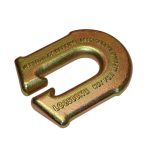
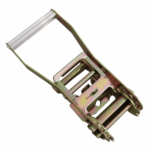
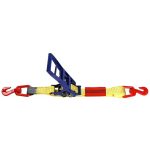
The webbing is only half the assembly. Replace the strap if the ratchet, hooks or keepers are bent, cracked, corroded or worn, or if the ratchet no longer locks and releases properly. The guide applies the same 10% strength rule to attachments as it does to webbing.
7. A missing or unreadable label
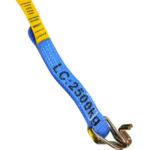
Every compliant webbing assembly carries a label showing its lashing capacity. Without it, you have no way of knowing what the strap is rated for, so it shouldn’t be used for load restraint. It’s also worth buying from reputable suppliers: ratchet straps sold in Australia have been recalled in the past for not meeting the relevant standard.
Ratchet strap inspection checklist
Run through this before every load. It takes a minute per strap, and it’s a simple habit to build into your pre-trip routine.
- Label is present and readable, showing the lashing capacity
- No cuts, nicks or tears, especially along the edges
- No furry, hairy or worn patches
- No fading, stiffness or brittleness from sun exposure
- No burns, melted spots, glazing or chemical staining
- Stitching intact, with no broken or pulled threads
- No knots, and no repairs the manufacturer hasn’t approved
- Ratchet locks and releases smoothly, with no bent, cracked or corroded parts
- Hooks and keepers straight and free of cracks, corrosion or excessive wear
If a strap fails any check, take it out of service straight away. Cut it up or clearly tag it so nobody puts it back on the truck by mistake.
During the trip, keep checking too. The guide recommends regularly checking and re-tensioning webbing along the way, which is also a good chance to spot damage early.
How to make your straps last longer
You can’t stop straps wearing out, but the right gear and a few good habits will slow it down a lot.
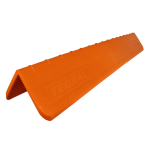
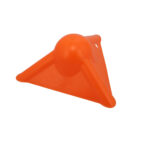
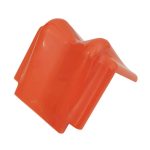
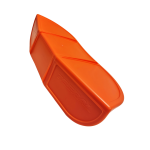
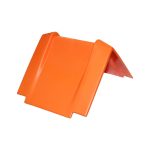
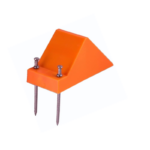
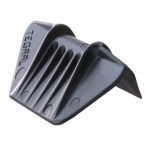
- Protect the edges. Sharp corners and rough surfaces are the number one strap killer. The guide recommends corner protectors, sleeves or packing wherever lashings touch the load. Pallet angles and strap angles also spread the tension so the strap can tighten evenly on both sides.
- Choose UV-stabilised webbing. In the Australian sun, UV-protected straps hold their strength for much longer than standard webbing.
- Store straps out of the sun. Keep them in a toolbox or cabinet between jobs, not draped over the headboard.
- Keep them clean and dry. Avoid chemicals and solvents, and let wet straps dry before storing them.
- Wind the ratchet properly. The guide recommends at least one and a half turns of webbing on the spindle, and no more than three, wound evenly across the drum.
- Never knot or tie off a strap. Use the hook and keeper as designed, and use strap keepers to tidy loose tails so they don’t flap and fray.
For more tips, read our guide: Make Your Ratchet Straps Last Longer: 8 Tips.
The bottom line
If you’re asking whether a strap is still OK, it probably isn’t. Straps are cheap compared with a lost load, a damaged product or a Chain of Responsibility investigation. Inspect before every use, bin anything that shows the warning signs, and protect your straps so they last as long as possible.
You May Also Be Interested In
Cargo Bars vs Shoring Bars: What’s the Difference?
How to Restrain Drums, Rolls and Gas Cylinders on Trailers
9 Practical Tips for Better Temperature Control During Transport
How Tegral Helps Transport Managers Hit Their Sustainability Goals
Check Out Our YouTube Channel
Products
100mm x 100mm x 2400mm E-Dunnage Timber
