














































































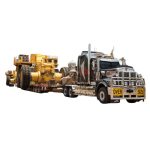

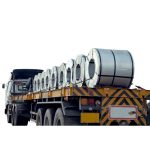



A well-restrained load doesn’t happen by chance. It happens through planning, consistency, and having clear processes in place before the truck even leaves the yard.
The NHVR’s Load Restraint Guide 2025 highlights loading plans as one of the most effective ways businesses can improve load restraint compliance, safety, and operational efficiency. Whether you’re transporting machinery, pallets, steel, dangerous goods, or general freight, loading plans help ensure everyone involved understands exactly how a load should be secured.
What Is a Loading Plan?
A loading plan is a document or visual guide that explains:
- How a load should be packed
- Where it should be positioned on the vehicle
- What restraint equipment is required
- How the load should be restrained for road transport
Think of it as a repeatable blueprint for a specific freight task.
Instead of relying on memory, assumptions, or different interpretations between loaders and drivers, loading plans create a standardised process that can be repeated safely every time.
Why Are Loading Plans Important?
Loading plans help remove uncertainty from load restraint.
Rather than asking:
- “How many chains should we use?”
- “Where should the load sit?”
- “Do we need friction mats?”
- “What tie-down points should we use?”
…the answers are already documented.
This can significantly improve:
- Compliance with HVNL loading requirements
- Workplace safety
- Loading speed and efficiency
- Consistency across depots and teams
- Communication between transport partners
- Driver confidence on the road
For businesses managing repeat freight movements, loading plans can save substantial time while reducing the risk of improper restraint.
What Information Should a Loading Plan Include?
Every freight task is different, but loading plans commonly include information such as:
Load Details
- Weight of the load
- Dimensions
- Centre of gravity considerations
- Packaging or stacking requirements
Vehicle Information
- Suitable trailer or vehicle selection
- Load capacity
- Load positioning instructions
Restraint Requirements
- Chain or webbing requirements
- Lashing angles and placement
- Dunnage or friction mat requirements
- Tie-down point locations
- Equipment specifications
Safety & Compliance Information
- Dangerous goods segregation requirements
- Known hazards and risks
- Health and safety instructions
- Park brake or lockout procedures
- Certification statements
- Contact details for responsible personnel
Visual diagrams are also commonly included to make instructions clearer for loaders and drivers.
Real-World Example: 15T Loader Transport
The NHVR Load Restraint Guide 2025 includes worked loading plan examples from page 204 onwards.
One example shows a 15-tonne loader secured to a trailer using specific chain lengths and tie-down locations.
The loading plan details:
- Chain lengths required
- Distance between tie-down points
- Front and rear restraint placement
- Cross-deck restraint arrangements
- Trailer dimensions relevant to restraint
Rather than leaving restraint decisions up to interpretation, the plan clearly shows exactly how the machine should be secured.
This is particularly valuable for:
- Heavy machinery transport
- Repeat freight movements
- Multi-site operations
- Driver handovers
- Contractor consistency
Loading Plans Improve Chain of Responsibility (CoR) Communication
Loading plans aren’t just useful internally.
Sharing loading plans with transport partners, customers, loaders, subcontractors, and drivers helps create consistency across the entire supply chain.
Under Chain of Responsibility (CoR) laws, multiple parties can influence load restraint outcomes. Having documented and shared loading plans demonstrates a proactive approach to managing transport safety risks.
Some businesses also include loading plans within contractual arrangements so all parties understand and agree on the restraint method before transport begins.
Where Can You Get Information for a Loading Plan?
Information used to develop loading plans may come from:
- Equipment manufacturers
- The NHVR Load Restraint Guide
- Load restraint specialists
- Industry associations
- Engineers
- Internal operational experience
- Freight and logistics software systems
For unusual freight tasks or complex transport operations, professional engineering advice may also be appropriate.
Should Loading Plans Be Certified?
In some cases, yes.
Once developed, loading plans should ideally be independently validated to ensure they comply with HVNL loading performance standards.
If validated by a suitably qualified engineer, the loading plan may include a certification statement. This can provide additional confidence during compliance inspections and roadside enforcement interactions.
Final Thoughts
Good load restraint starts before the load is even on the truck.
Loading plans help businesses:
- Standardise restraint methods
- Improve safety
- Reduce compliance risk
- Increase loading efficiency
- Build stronger CoR practices
For operations handling repeat freight movements, loading plans can become one of the most valuable tools in creating safer and more efficient transport systems.
The less guesswork involved in load restraint, the better the outcome for everyone involved.
You May Also Be Interested In
Restraining Precast Concrete Panels and Beams
Maxibinders vs Traditional Load Binders: Differences, Pros and Cons
Practical Video Resource to Help Drivers Manage Steep Descents
How to Prevent Shoulder Injuries in Transport Operations
Check Out Out YouTube Channel
Products

250mm x 250mm Dangerous Goods Labels – Limited Quantity Classes
$0.75 - $1.00$0.75 - $1.00
Shoring Bar Removal Tool – 370mm
Peaked Curved Angle
$15.00 ex GST
G70 Grab Hook 6mm – Clevis
$4.50 ex GST

Strap Launcher

Round Single Use Sling 1T x 1.5m
$8.50 ex GST
Dangerous Goods Segregation Box – Type II
$3,720.40 ex GST
Mini Container Bolt Seal (Domestic Use)
$0.66 ex GST
Sub Class Dangerous Goods Banner (EIP)
$120.00 ex GST
Portable Truck Fall Protection Barrier