





































































































































Australia’s Heavy Vehicle National Law (HVNL) is undergoing its most significant overhaul since the law was introduced. The Heavy Vehicle National Law Amendment Bill 2025 passed Queensland Parliament in November 2025 without amendment, and the changes are expected to commence mid-2026.
For fleet owners and operations managers, these reforms represent a fundamental shift in how compliance is structured, audited, and enforced. The old world of tick-box compliance is over. The new world is built on documented, auditable Safety Management Systems, and if you’re not ready, the consequences extend well beyond the driver’s seat.
Here’s everything you need to know, and exactly what to do about it.
Why This Reform Happened
The HVNL review began in 2019, led by the National Transport Commission (NTC). The goal was to modernise a law that had become increasingly prescriptive, fragmented, and difficult to enforce consistently across jurisdictions.
The core problems the review identified:
- Compliance was reactive rather than proactive
- Accreditation schemes were siloed and difficult to navigate
- Chain of Responsibility obligations weren’t being applied consistently beyond the driver
- Fatigue management frameworks were outdated and unnecessarily complex
- Mass and dimension rules weren’t keeping pace with modern vehicle standards
The result is a reform package that touches almost every part of how heavy vehicle operations are regulated in Australia.
What Is Actually Changing: The Plain-Language Breakdown
1. The Old Accreditation Scheme Is Being Replaced
The National Heavy Vehicle Accreditation Scheme (NHVAS), which has been the framework for operator accreditation for years, is being retired. In its place comes a new two-tier Heavy Vehicle Accreditation (HVA) framework:
General Safety Accreditation (GSA) is the new baseline. If you want to operate a heavy vehicle business with regulatory recognition, this is what you need. It requires a documented, auditable Safety Management System and evidence that it’s actually working in practice.
Alternative Compliance Accreditation (ACA) is a flexible pathway for operators who want to pursue operational concessions, such as alternative fatigue compliance arrangements, in exchange for demonstrating a higher level of safety management capability.
What this means for you: NHVAS will stop accepting new applicants the moment the new law commences. Existing NHVAS holders have a transition window of up to three years, with operators moving across on the expiry of their current accreditation, or earlier by choice. If your accreditation is due for renewal, you need to understand which new category you’re moving into and whether your existing systems will meet the new standard.
2. Safety Management Systems Are Now the Centrepiece of Everything
This is the biggest cultural shift in the entire reform package, and the one that will require the most preparation for most businesses.
Under the new framework, a Safety Management System (SMS) is not a document you file away. It is a living, auditable system that sits at the heart of your accreditation, your compliance obligations, and your Chain of Responsibility position.
The SMS standard is built around five core outcomes:
| Outcome | What It Means in Practice |
|---|---|
| Leadership & Commitment | Senior management visibly owns safety. Policies exist and are actively communicated. |
| Risk Management | Hazards are identified, assessed, and controlled with documented processes. |
| People | Workers are trained, competent, and have clear safety responsibilities. |
| Assurance & Improvement | The system is reviewed, audited internally, and improved over time. |
| Safety Systems | Operational systems, including load restraint, vehicle maintenance, and fatigue management, are documented and followed. |
Critically, the SMS must be scalable and proportionate to your operation. A sole operator with two trucks won’t be held to the same documentation standard as a 100-vehicle fleet. But everyone needs a system, and the regulator must be satisfied it genuinely works.
What this means for you: If you don’t have a documented SMS right now, start building one immediately. If you do have one, review it against these five outcomes and identify the gaps. The transition period provides time to get it right, but not time to ignore it.
3. Audits Are Getting More Structured and More Frequent
The new National Audit Standard (NAS) creates a nationally consistent framework for how SMS and accreditation requirements are assessed. Audits will be conducted by independent, approved auditors, not self-reported compliance.
For new entrants to the HVA scheme, there are up to three audits:
- An entry audit
- An initial compliance audit (may be waived if you demonstrate all four PSOE elements at entry: Present, Suitable, Operating, and Effective)
- A compliance audit
For existing operators, one compliance audit is required per accreditation period, conducted within the final 9 to 1 months before expiry.
But here’s the piece that catches many operators off guard: you are also expected to conduct ongoing internal audits and maintain evidence continuously. The external audit is not the only check. Operators who only prepare when an auditor is coming will find themselves in trouble.
What this means for you: Build internal audit processes into your operations now. Assign responsibility for maintaining SMS evidence to a specific person or role. Create a documentation habit, not a documentation panic.
4. The “Unfit to Drive” Duty Has Been Significantly Expanded
Under the current law, driver duty obligations are heavily focused on fatigue. The reformed HVNL takes a much broader view.
The new Unfit to Drive duty means a driver must not drive, and has the legal authority to refuse or stop driving, if they are unfit for any reason, including:
- Physical illness or injury
- Mental illness
- Alcohol
- Drugs (prescribed or otherwise)
- Fatigue
This aligns heavy vehicle law with obligations under the Work Health and Safety Act 2011 and puts the responsibility squarely on both the driver and the business to proactively manage health and fitness.
What this means for you: Your SMS must include processes for managing driver fitness for duty — not just fatigue. Pre-trip health checks, clear policies on medication and illness reporting, and support processes for drivers experiencing health challenges are no longer nice-to-haves. They are auditable requirements.
5. Fatigue Management Is Being Simplified and Strengthened
The existing Basic Fatigue Management (BFM) and Advanced Fatigue Management (AFM) schemes are being replaced by a single Alternative Compliance Hours standard under the ACA framework.
Driver record-keeping requirements are also being simplified, and electronic work diaries (EWDs) are being updated to align with the new law.
What this means for you: If your operation relies on BFM or AFM concessions, you need to understand how the Alternative Compliance Hours standard will apply to your specific situation and whether you’ll need to apply for ACA. Don’t assume your current arrangements automatically carry over.
6. Mass, Dimensions, and Loading: Mostly Good News
This is the area of the reform that most directly affects your productivity, and the news is largely positive:
- General Mass Limits (GML) increase to align with the current Concessional Mass Limits — meaning more operators get access to higher mass limits without needing special permits
- Vehicle length limit increases from 19 metres to 20 metres for general access vehicles
- Euro VI road trains now eligible for mass concessions (previously limited to other vehicle types)
- Tag trailer tow mass ratios have been updated
What this means for you: Review your fleet configurations against the new limits. If you’ve been operating under CML permits for mass, you may find you no longer need them. If you’re running or planning Euro VI vehicles, the expanded concessions may change what you can carry.
The Chain of Responsibility: It Reaches Further Than You Think
One of the consistent threads running through the entire HVNL reform is an expansion and clarification of Chain of Responsibility (CoR) obligations. This isn’t new. CoR has been law for years. But the new framework makes it much harder for non-drivers to claim they had no role in a compliance failure.
Under CoR, every party with control or influence over a transport task shares responsibility for safety. That includes:
- Fleet owners and operators
- Operations managers and schedulers
- Consignors and consignees
- Loaders and packers
- Maintenance providers
A pattern of non-compliance, even without an incident, can now be used as evidence of a primary duty failure. You don’t need a crash to be prosecuted. You need a documented failure to take reasonable steps to ensure safety.
The practical implication: Your SMS is your CoR shield. A well-documented, genuinely operating Safety Management System demonstrates that your organisation took proactive steps to manage safety across the chain. Operators without one have no defence.
Load Restraint: Where Compliance Gets Physical
For fleet owners and ops managers, load restraint is one of the most visible and auditable parts of your safety obligations, and one of the most commonly cited areas of non-compliance.
Under the NHVR’s updated Load Restraint Guide (Edition 4, 2025), best-practice load restraint standards have been clarified and updated. The next major revision of the guide is already under consultation, with significant changes expected to align with the broader HVNL reform package.
Key load restraint obligations that your SMS must address:
- Equipment is rated appropriately for the loads being carried
- Equipment is inspected regularly and worn or damaged items are replaced
- Operators and loaders are trained in correct restraint methods
- Loading plans are documented and communicated before transport
- Records are maintained of inspections and any equipment replacements
Using under-rated, worn, or incorrect load restraint equipment isn’t just a safety risk. Under the new framework, it’s direct evidence of a failure to meet your primary duty under HVNL section 26C.
Your Pre-Mid-2026 Action Plan
Time is short. Here’s a practical, prioritised action plan for fleet owners and ops managers to work through before the new law commences:
Immediate (Do This Now)
- Identify your current NHVAS status: what accreditation do you hold and when does it expire?
- Determine which HVA category you belong in: GSA for most operators, ACA if you rely on fatigue concessions
- Audit your load restraint equipment: inspect all straps, chains, and restraint systems; replace anything worn, damaged, or incorrectly rated
- Document your current safety processes: even informally, start capturing what you do so you have a baseline for your SMS
Short-Term (Next 30–60 Days)
- Build or formalise your SMS against the five core outcomes (Leadership & Commitment, Risk Management, People, Assurance & Improvement, Safety Systems)
- Review your driver fitness-for-duty processes: update policies to reflect the expanded Unfit to Drive duty
- Assign SMS ownership: someone in your organisation must own this system and be accountable for keeping it current
- Review your fleet dimensions and mass limits against the new GML and length provisions
Before Mid-2026
- Conduct an internal SMS audit against the NAS criteria: identify and address gaps before an external auditor does
- Brief your entire team: drivers, loaders, schedulers, and admin staff all have roles in your SMS; they need to understand what’s changing and why
- Check your fatigue management arrangements: if you use BFM or AFM, understand how Alternative Compliance Hours applies to you
- Engage an approved auditor for a pre-commencement gap assessment if you want an independent view of your readiness
- Update your loading plans and load restraint documentation to align with the updated Load Restraint Guide
A Word on Load Restraint Equipment
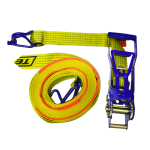
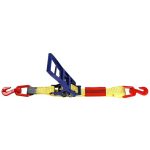
Your SMS is only as strong as the equipment your team uses every day. A documented process for load restraint means nothing if your straps are worn through and your buckles are failing.
Before mid-2026, take stock of your load restraint inventory:
- Are your straps rated for the loads you’re actually carrying?
- Are wear sleeves in place to protect webbing at contact points?
- Are buckles and ratchet mechanisms operating correctly?
- Is there a documented inspection and replacement schedule?
These are the questions an auditor will ask. Make sure your equipment and your records give you the right answers.
The Bottom Line
The HVNL reform is not a bureaucratic exercise. It reflects a genuine shift in how Australia’s heavy vehicle industry is expected to manage safety — from a system where compliance was something you demonstrated to a regulator, to one where safety is something you genuinely manage, document, and improve every day.
For fleet owners and ops managers who are already running tight, professional operations, the new framework mostly formalises what good operators already do. The burden falls hardest on those who have been getting by on informal practices and hoping nothing goes wrong.
Mid-2026 is the deadline. The preparation window is now.
Tegral supplies professional-grade load restraint equipment built to Australian compliance standards. If you’re auditing your load restraint inventory ahead of the HVNL reforms, our team can help you identify the right products for your operation.
Browse Tegral Load Restraint Products | Request a Bulk Quote | Contact Our Team
Disclaimer: This article contains general information about the HVNL reform and is not legal advice. Operators should consult the NHVR directly and seek independent legal or compliance advice regarding their specific obligations under the amended law. All legislative details are based on publicly available information from the NHVR as at April 2026.
Read more on the NHVR website.
Sources: NHVR HVNL Reform Implementation page; Heavy Vehicle National Law Amendment Bill 2025; NHVR Load Restraint Guide 2025 (Edition 4); MAEZ Consulting HVNL 2026 CoR Changes.
You May Also Be Interested In
Sham Contracting in the Spotlight: What Transport Operators Should Know
Have Your Say on Proposed Changes to Heavy Vehicle Charges
Practical Video Resource to Help Drivers Manage Steep Descents
How to Prevent Shoulder Injuries in Transport Operations
Check Out Our YouTube Channel
Products
Strap Launcher

Round Single Use Sling 1T x 1.5m
$8.50 ex GST

1050mm Pallet Angle – White
Original price was: $14.35.$10.00Current price is: $10.00. ex GST
Dangerous Goods Segregation Box – Type II
$3,720.40 ex GST
Mini Container Bolt Seal (Domestic Use)
$0.66 ex GST
Sub Class Dangerous Goods Banner (EIP)
$120.00 ex GST

1m x 8mm Maxibinder
$120.00 ex GST
Portable Truck Fall Protection Barrier

Ratchet Strap Thrower

PVC A-Trailer Tarp
$3,200.00 ex GST
PVC Rigid Truck Tarp