






































































































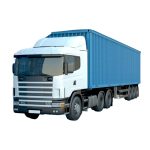
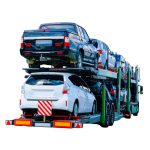
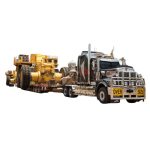
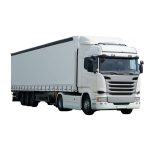
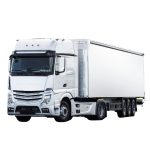

Australia’s size is easy to state and hard to picture: 7.692 million km² of coastline, outback, farmland and city. That scale, paired with a population spread thinly across it and industries built around distant mining, agricultural and business hubs, makes domestic transport one of the country’s most essential, and most competitive, sectors.
Australia’s freight and logistics market reflects that scale: it’s now worth over $100 billion annually and is forecast to keep growing through the rest of the decade, driven largely by e-commerce and expanding freight demand.
So who’s actually moving the country? If you’ve searched for the biggest trucking companies in Australia, the answer depends on what you’re measuring. The two lenses below, prime movers vs. commercial vehicles, each point to a different market leader.

Biggest Trucking Fleet by Prime Movers: Linfox
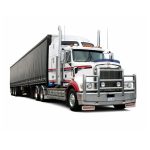
When it comes to prime movers, the heavy-duty trucks that haul the trailers doing Australia’s long-haul work, Linfox holds the clearest lead of any trucking operator in the country. Linfox runs Australia’s largest private transport fleet, giving it dominant coverage across FMCG, retail and resources freight.
Its closest rival in this class is Centurion, whose fleet is built primarily around mining logistics — reflecting the resources-heavy freight task in WA and Queensland rather than general retail distribution.
Other major players by prime mover count include Qube, which runs a fleet of 900+ prime movers supporting containerised freight movement between ports, warehouses and customers nationally.

Biggest by Commercial Vehicles: Toll Group / Global Express
Commercial vehicles (utes, vans and light trucks used as load-carriers and tow vehicles) tell a different story. Here, Toll Group, through its parcel and pallet freight division Global Express, holds a considerable lead, driven by heavy investment in vans and light trucks to support last-mile parcel and pallet delivery at a local level.
Toll’s overall scale is hard to overstate: founded in 1888 and now headquartered in Melbourne, it’s Australia’s largest logistics provider by revenue, operating across 1,200+ locations globally and serving the automotive, retail and healthcare sectors by road, rail, sea and air.

Biggest Trailer Fleet: Linfox, Ahead of a Crowded Field
Trailer numbers tell yet another version of the story, and this is where Linfox takes out top spot across all three categories, running roughly 2,500 trailers nationally. Global Express (Toll) sits close behind at around 2,000, confirming that Toll’s strength isn’t limited to vans and light commercial vehicles; it’s built a substantial trailer fleet to match.
From there the field is genuinely deep. Australia Post, Primary Connect, K&S Group and Qube all run trailer fleets in the 1,400 to 1,750 range, while ACFS Port Logistics and Centurion sit around 1,250. Kalari and Glen Cameron Group round out the top tier at roughly 1,000 trailers each. Below that, the fleet sizes drop off sharply, from around 500 down to 270, covering operators like Mainfreight, Ron Finemore Transport, GTS Freight Management and Followmont.
The trailer data reinforces the overall picture: Linfox and Toll’s Global Express are the two clear heavyweights of Australian trucking by fleet size, regardless of which vehicle class you’re measuring, with a long list of substantial national and regional operators making up the rest of the field.
The transport industry is shifting, not just growing
A few trends worth watching if you’re tracking the biggest trucking and transport companies in Australia:
- Fleet renewal is accelerating. Toll has committed AUD $200 million toward Euro 6 prime movers, introducing nearly 400 new Euro 6 units as part of a broader upgrade cycle.
- Electrification has moved from trial to procurement. Linfox has placed an order for 30 electric prime movers with deliveries underway, while Toll is running a separate $67 million battery-electric heavy vehicle and charging infrastructure program co-funded by ARENA’s Driving the Nation Program.
- The overall truck fleet is shrinking, not growing. New registrations for prime movers, trailers and rigids sat at just over 40,000 units in 2025, on par with 2022 but six to seven thousand units below the 2023–24 peak. Prime mover registrations specifically have fallen by over 20% in the past year, and insolvency rates in road transport reached roughly one in twelve operators in the 12 months to November 2025.
Note: The fleet figures cited reflect the most recent data publicly available at the time of writing (2022) and may not represent current fleet sizes.
You May Also Be Interested In
How to Prevent Shoulder Injuries in Transport Operations
Where Fleet Managers Lose the Most Time: And How to Get it Back
The Difference between a Winch Strap and a Ratchet Strap
Load Height Variations: The Hidden Cause of Load Shift (and How Fleets Can Prevent It)
Check Out Our YouTube Channel
Products

Shipping Container Desiccant 1kg
Universal Truck Tarp
$2,100.00 ex GST
Magnetic Red Marker Light

Trade Safety Glasses – Smoke Lens

Wheel Clamp Replacement Strap – 3m x 50mm x 1750kg

Wheel Harness Ratchet Tie Down – 1.5m x 50mm x 550kg

Wheel Clamp Replacement Strap – 2.6m x 50mm x 2500kg (200mm Loop)

250mm x 250mm Dangerous Goods Labels – Limited Quantity Classes
$0.75 - $1.00$0.75 - $1.00