















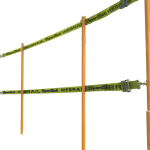
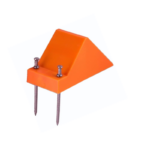
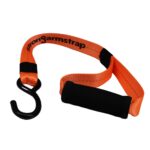





































Every load restraint system relies on one of two core methods — or a combination of both — to keep freight secure on a heavy vehicle: direct restraint and friction restraint. Understanding the difference isn’t just a compliance exercise, it’s the foundation of getting your loading plan right the first time.
What is Direct Restraint?
Direct restraint controls a load’s movement — forward, backward and sideways — without any reliance on friction. It works by attaching, blocking, or containing the load, and it’s particularly useful for freight that’s difficult to tie down. There are three ways to apply it:
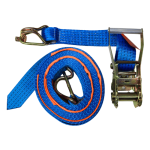
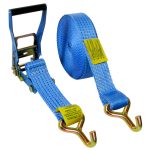
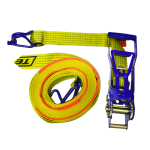
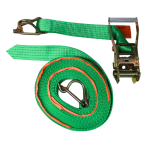
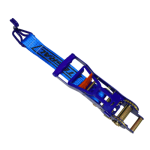
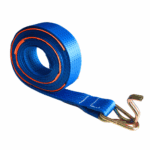
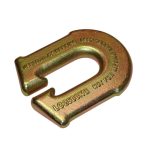
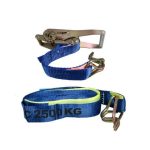
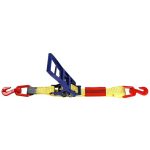
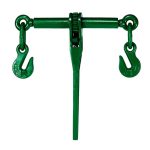
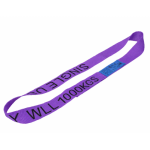
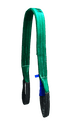
Attaching — Direct lashings (webbing straps, chains, or twist locks) attach the load straight onto the vehicle. They’re especially suited to loads with little or no friction against the deck, such as:
- Slippery loads
- Loads on wheels
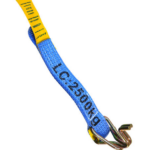
The strength required depends on the load’s weight, the number of lashings, and their direction. Every lashing has a rated capacity (marked by the manufacturer) that should never be assumed — a few typical examples from the guide:
| Lashing | Typical capacity |
|---|---|
| 12mm synthetic rope | 300 kg |
| 25mm webbing | 250 kg |
| 35mm webbing | 1.5 t |
| 50mm webbing | 2.5 t |
| 8mm transport chain (claw/winged hooks) | 3.8 t |
| 10mm transport chain (claw/winged hooks) | 6.0 t |
| 13mm Grade T chain (claw/winged hooks) | 10.0 t |
Chain capacity drops when using grab hooks or edge contact instead of claw/winged hooks, and drops further if the chain runs over a sharp edge like a coaming rail — always use the lowest rated value in that chain-and-hook combination.
A simple rule of thumb: when lashings are angled at less than 25° from the horizontal and 45° from the vehicle’s centreline (viewed from above), aim for a combined lashing capacity of twice the load’s weight in the forward direction, and the load’s weight in the sideways and backward directions. Lashings only count as “working together” if they’re the same length and angle. And direct lashings must always angle opposite to the expected direction of load movement — a lashing angled down from the back of a load stops it moving forward.
Blocking — A headboard or side/tail gate blocks the load from moving horizontally, provided it’s strong enough to withstand the forces set out in the Performance Standards. A common reference point is a headboard rated to withstand 0.3g of forward force; if yours doesn’t meet that, you’ll need to fall back on unblocked-load calculations, which usually means more lashings.
Containing — The load is restrained against horizontal movement by the vehicle’s structure itself, or by other parts of the load packed around it. For heavy loads, “contained” means simultaneously and fully blocked forwards, rearwards, and sideways.
Direct restraint is typically essential for loads like:
- Large, heavy machinery (bulldozers, forklifts, scissor lifts)
- Wheeled equipment and vehicles
- Loads with smooth, low-friction bases (steel plate, plastic-wrapped freight)
What is Friction Restraint?
Friction is the force that resists one surface sliding across another — the same reason it’s hard to push a box across a concrete floor. In load restraint, there are two types: static friction, which applies before the load starts moving, and dynamic friction, which applies once it’s already moving. The guide’s tables and case studies are based on static friction.
Friction restraint (the tie-down method) works by generating clamping force between the load and the deck — partly from the load’s own weight, partly from tensioned lashings pulling it down. The critical rule: the weight of the load alone does not provide adequate friction to restrain it, and for tie-down restraint to work at all, the load has to stay in contact with the deck for the entire journey.
Lashing angle matters a lot. The steeper the angle, the more clamping force you get:
| Lashing angle | Tie-down effectiveness |
|---|---|
| 90° | 100% |
| 60° | 85% |
| 45° | 70% |
| 30° | 50% |
| 15° | 25% |
In practice, that means one lashing at 90° generates the same clamping force as four lashings at 15° — a useful way to explain to a loader why angle matters as much as lashing count. Pre-tension also plays a role: a high pre-tension ratchet produces more clamping force than a standard one, which can reduce the number of lashings needed overall.
Where friction varies across a load — different surfaces, different layers — design for the lowest friction point, since that’s where the system is most likely to fail. Friction can be increased with high-friction rubber matting, dunnage, or interlayer packing between the load and the deck (or between layers of a bundled load).
Worked case study: An 8,000kg sandstone block sat on timber dunnage, secured with two lashings at 75° with 750kgf pre-tension each. Checking the guide’s tables for an unblocked load with medium friction (timber, µ0.4) and two lashings at 75° shows a restraint capacity of just 2,800kg — well short of the 8,000kg block. Sandwiching the timber dunnage with high-friction rubber matting (between the deck and dunnage, and between the dunnage and the load) lifted the system’s capacity to 8,600kg — enough to meet the standard, without adding a single extra lashing.
Risks to watch for:
- Bundled products sometimes can’t be restrained by clamping alone — consider belly wrapping or end structures to stop movement within the bundle.
- Steel-tracked equipment (like an excavator) on a steel deck has very low friction — this is a case where direct restraint, not friction, is the appropriate method.
- Poor clamping with tie-down only, especially on low-friction loads, risks the load “spearing” forward under braking.
So which one do you use?
In practice, most real-world loads use a combination of both. Direct restraint anchors the load against major forces using structure and hardware; friction restraint fine-tunes the system and picks up the slack in directions the structure doesn’t cover. The NHVR’s performance standards don’t prescribe a method — they set the outcome you need to achieve (for example, resisting 0.2g of upward force if relying on friction) and leave the “how” up to you, as long as you can demonstrate compliance.
The bottom line for operators
- Slippery, wheeled, or awkward loads → lean on direct restraint and rated structural points.
- Loads with good deck contact → friction restraint, boosted by lashing angle and pre-tension, can reduce equipment and lashing count.
- Most freight → a combination, tailored to your specific load, vehicle, and route.
If you’re unsure whether your current system meets the performance standards, the Load Restraint Guide’s case studies are a good next stop — or speak to a load restraint specialist for anything non-standard.
This post references the NHVR Load Restraint Guide 2025 (Edition 4). The guide is an information resource, not a legal document — always confirm your obligations under the Heavy Vehicle National Law.
You May Also Be Interested In
Who’s Liable? A Guide to the Chain of Responsibility in Load Restraint
Why Tegral Pallet Angles Last Longer Than Standard Alternatives
Checklist for August 1 HVNL Changes
Why E-Track and F-Track Straps Are Rated Lower Than Regular Straps
Check Out Our YouTube Channel
Products
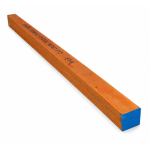
100mm x 100mm x 2400mm E-Dunnage Timber
